An ingrown toenail happens when the edge of the nail presses or grows into the skin beside it. It can be mildly sore or very painful, and the skin can become red, swollen or infected. Our podiatrists see ingrown toenails every day, in adults, teenagers and young children.
Signs of an ingrown toenail
- Pain along the side of the nail, especially in shoes or when the toe is pressed
- Redness, swelling or warmth around the nail edge
- Pus, bleeding or extra tissue growing over the nail
- A nail that keeps becoming ingrown after you’ve cut it back
Common causes
Nail shape is a big factor, especially nails that curve down at the edges. Cutting nails short or rounding the corners, tight or narrow shoes, pressure from sport and injury to the toe can all contribute.
Often there is also an underlying fungal nail infection that has been there for years. Fungus can slowly work its way into the nail and change its shape, so the nail no longer grows out straight and can start growing in directions it shouldn’t, including into the skin.
Three main treatment options
Not every option is right for everyone, so a proper assessment comes first. We check the blood flow to your feet, how long the nail has been a problem, your medications and your medical history, so we can recommend an option that is suitable for you. We look at your whole foot, not just the nail, and work out a proper plan with you.
Conservative care
Carefully removing the offending nail edge, relieving pressure and dressing the area, with advice on nail cutting and footwear. We review your toe within 4 to 7 days to check it is healing well. For an ingrown nail that hasn’t been there long, this is often all that’s needed.
Nail bracing (Onyfix)
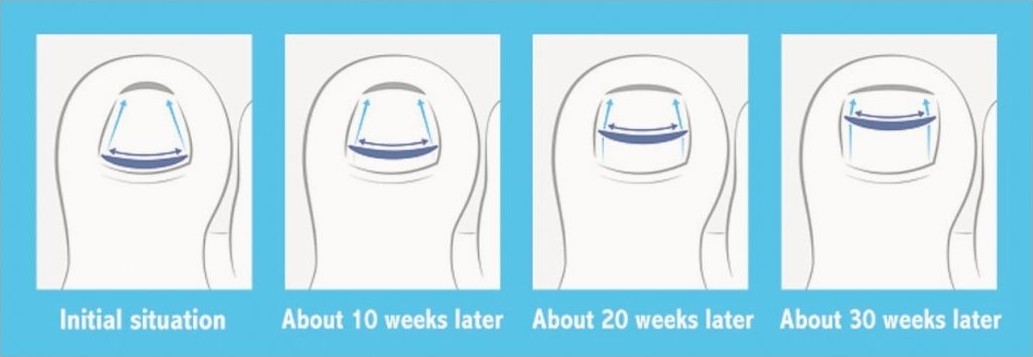
A composite brace applied to the surface of the nail to guide a curved nail into a flatter shape as it grows. No cutting and no injections. Can suit babies, kids, people with diabetes, or anyone wanting a gentle, conservative approach.
Nail surgery
If the nail keeps coming back, the problem is severe or long-standing, the nail is very wide, or there is extra tissue growing over the nail, we remove the problem edge (or occasionally the whole nail) under local anaesthetic and treat the nail root to reduce regrowth.
Why it’s worth treating
An ingrown toenail can start as simple inflammation along the nail edge. Left untreated, infection can spread into the surrounding skin and, rarely, deeper into the toe. That’s why we take ingrown toenails seriously and follow up until the toe has healed.
Nail bracing with Onyfix
Onyfix is a thin composite brace applied to the surface of the nail. It doesn’t touch the skin and involves no cutting, so it suits many people who would rather avoid surgery, including kids and people with diabetes.
- We prepare the nail, apply the brace and check it again a few days later.
- You can still swim, play sport and wear nail polish.
- One treatment cycle runs for around 7 months. A big toenail often needs 2 cycles, so treatment can take around 14 months in total.
- Throughout treatment you’ll have monthly skin and nail appointments, where we manage the nail as it grows and replace the brace when needed.
- At the end of each cycle we re-examine the nail and let you know whether another cycle would help.
Your initial assessment
Before any nail surgery, we screen your health to make sure the procedure is suitable for you. This can be done at your initial assessment. We’ll ask about:
- How long the nail has been a problem, and whether it has happened before
- Any previous local anaesthetic, and any allergies
- Bleeding or clotting problems, and blood thinners
- All your medications. Some, such as certain acne medications, can slow healing
- Kidney and liver health, epilepsy and pregnancy
- Circulation and feeling in your feet, such as cramping, pins and needles or numbness
- Whether you need antibiotics beforehand, for example if you have diabetes, a heart stent or a weakened immune system
We also weigh you so we can calculate the right dose of local anaesthetic for you, and talk you through the procedure and recovery. You’ll receive a personalised quote, which covers the procedure and your follow-up review appointments.
What to expect with nail surgery
Most toes heal within 2 to 6 weeks. We’ll keep seeing you until yours has fully healed.
Before your procedure
- Arrange for someone to drive you home, as your toe will be numb for a few hours
- Bring loose, open-toed footwear
Why your review appointments matter
Your reviews are a key part of your recovery. At each one, we:
- Gently soften and remove your dressing
- Clean the area and carefully remove any scab or build-up so the toe heals well from underneath
- Check closely for any signs of infection
- Apply a fresh antiseptic dressing and talk you through caring for it at home
We keep seeing you weekly until the toe has fully healed, then check in at 3, 6 and 12 months to make sure the nail edge hasn’t regrown.
Caring for your toe at home
- Re-dress the toe each day as we show you, using an antiseptic and a fresh dressing
- Keep the dressing dry: no showering over it and no swimming until it has healed
- Wear open-toed shoes until it has fully healed
- We’ll give you written aftercare instructions, including pain relief
- Contact us straight away, or seek medical advice, if you notice redness, increasing pain, odour, discharge or pus, or you feel unwell
Kids and teens
Ingrown toenails are common in growing children and teenagers. We explain each option to you and your child and go at their pace.
When to be seen quickly
If you have diabetes, poor circulation or reduced feeling in your feet, have any nail problem checked promptly. If redness is spreading or you feel unwell with a fever, seek urgent care.
Sometimes advice is all you need
Not everyone needs treatment. Sometimes the most helpful thing is a clear explanation of what’s going on, practical advice and a plan you can manage yourself. We’ll always talk you through every option, including no treatment, so you can decide what’s right for you.

Frequently asked questions
Does nail surgery hurt?
We numb the toe with a local anaesthetic first. Our podiatrists are well trained and experienced in giving these injections, including to kids and nervous patients, and we take it slowly and as gently as possible. You’ll feel the injection, and after that you shouldn’t feel the procedure itself. We’ll talk you through managing any soreness afterwards.
Will the nail grow back?
The aim is to stop the problem edge regrowing, and in most cases it doesn’t. There is a small chance (around 2 to 8%) of some regrowth. We’ll explain this at your appointment.
How long is recovery?
Most toes heal within 2 to 6 weeks. You’ll need to keep the dressing dry, so no swimming until it has healed, and wear open or roomy shoes. We’ll give you a plan for dressings, sport and work.
Is Onyfix painful?
Most people find it comfortable. The brace sits on top of the nail and doesn’t touch the skin.
Do I need a referral?
No. You can book directly with one of our podiatrists.
Can I claim on private health?
We don’t offer on-the-spot claiming. If your extras cover includes podiatry, you can claim with your fund using your itemised receipt. Check with your fund about your level of cover.