Diabetes can affect the nerves and circulation in your feet, often without you noticing. A regular foot check helps pick up changes early, so small problems can be looked after before they become bigger ones.
How diabetes can affect your feet
Your feet rely on a good blood supply to stay healthy, and on lots of nerves that act as a warning system. If you have a stone in your shoe, those nerves tell your brain something is wrong.
Over time, diabetes can affect both. Nerve changes can mean you no longer feel that stone, so a blister, cut or ingrown nail can go unnoticed. Reduced circulation means cuts, burns and blisters take longer to heal. Together, these can let small problems turn into wounds or ulcers, which is why regular checks and daily care matter so much.
Who should have a diabetes foot check
- Anyone with type 1 or type 2 diabetes, at least once a year
- People with numbness, tingling or burning in their feet
- Cold feet or changes in skin colour
- Corns, callus, thick nails or slow-healing wounds
- Anyone who has had a foot ulcer before
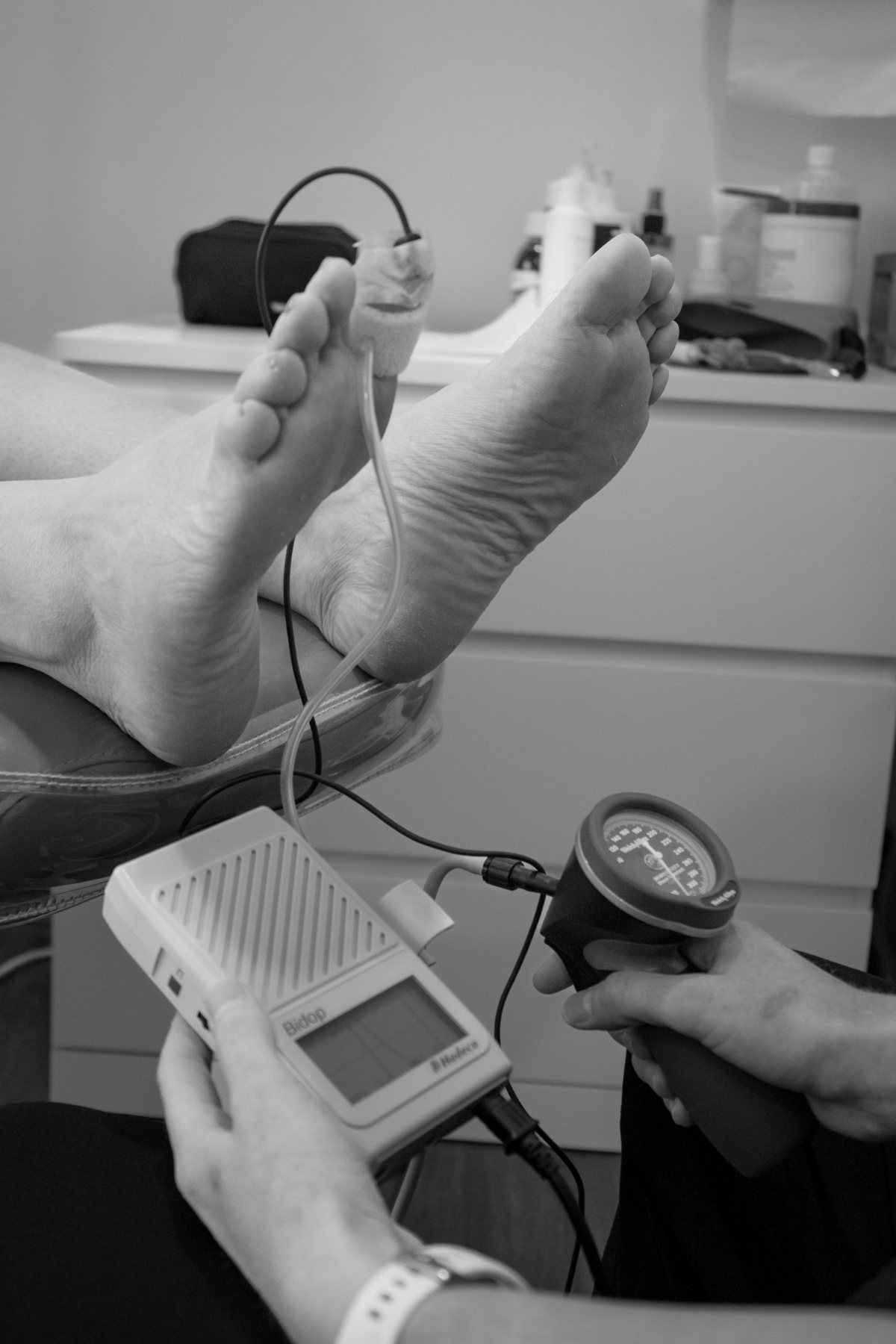
Your diabetes neurovascular assessment
This is a thorough check of how diabetes may be affecting your feet, so we can spot changes early and plan your care.
Where needed, we also look after your nails and any callus or corns in the same appointment.
Your foot risk level
Your results help us work out your foot risk, which guides how often we recommend seeing you.
- Low risk: usually every 6 to 12 months.
- Medium risk: usually every 3 to 6 months.
- High risk: usually every 1 to 3 months.
Many people also find regular podiatry nail and skin care helpful between checks, along with a visual inspection of their feet by a professional.
Your personalised action plan
- How often to come back, based on your risk level
- Care for anything we find, such as a skin and nail plan for fungal nails or skin infections
- Further assessments where helpful, such as a biomechanical assessment, orthotic review or footwear fitting in our shoe and movement shop
- Products that may help, such as pressure-relieving insoles, custom orthoses or compression stockings
- Whether you can safely look after your own nails at home, or whether you’d like us to help
Looking after your feet at home
- Check your feet every day, including between your toes. We can show you how.
- Wash with a gentle, low pH wash and dry well between your toes.
- Use a urea-based moisturiser on dry skin, but not between your toes.
- Avoid walking barefoot, even at home.
- Shake out your shoes before you put them on and check inside for rough edges.
- Choose lace-up shoes that are deep and wide enough at the toes, with cotton socks.
- Keep your blood sugar levels in the range your GP or diabetes educator recommends, stay active and avoid smoking.
- Cover any cut or graze with an antiseptic and a clean dressing each day. If it isn’t healing, see your podiatrist or GP.
When to call us straight away
If you have diabetes and notice a new wound, swelling, redness, warmth or a black or darkening area on your foot, seek help the same day. See urgent care.
Working with your care team
We work with your GP, diabetes educator, endocrinologist and other specialists, and refer to hospital high risk foot services when needed.
Sometimes advice is all you need
Not everyone needs treatment. Sometimes the most helpful thing is a clear explanation of what’s going on, practical advice and a plan you can manage yourself. We’ll always talk you through every option, including no treatment, so you can decide what’s right for you.
Frequently asked questions
How often should I have my feet checked?
At least once a year. If your foot risk is higher, we’ll recommend seeing you more often.
What is a diabetes neurovascular assessment?
A detailed check of the nerves (neuro) and circulation (vascular) in your feet, along with your skin, nails, movement and footwear. It tells us your foot risk level and guides your care plan.
Can I use a Medicare referral?
Yes. If your GP has given you a Chronic Condition Management referral, you can use it for podiatry and receive a Medicare rebate.
Can I cut my own toenails?
Many people can. If you have reduced feeling, poor circulation or find it hard to reach or see your feet, we may recommend we look after your nails for you. We’ll talk about what’s safest for you.
Can I have a pedicure if I have diabetes?
Please see a podiatrist first. We can let you know whether a pedicure is suitable for you afterwards.
Do I need a referral?
No. You can book directly with one of our podiatrists.
Can I claim on private health?
We don’t offer on-the-spot claiming. If your extras cover includes podiatry, you can claim with your fund using your itemised receipt. Check with your fund about your level of cover.