Comfortable feet make it easier to stay active, independent and connected. We help with nail and skin care, footwear, balance and mobility, so you can keep walking, gardening, travelling and doing the things you enjoy.
Ageing doesn’t have to mean unhealthy feet
Some changes to your feet are a normal part of getting older. Others, like infections, wounds and painful nails, are not a given. With a bit more time, care and intention, and the right footwear, regular podiatry can help lower your risk and keep you doing what you love.
How we can help
- Thick, curved or hard to cut toenails
- Ingrown, painful or fungal nails
- Corns, callus and dry or cracked heels
- Arthritis and stiff, sore joints
- Balance concerns or a recent fall
- Finding comfortable, supportive footwear
- Neurological conditions affecting walking, such as Parkinson’s or after a stroke
- Diabetes and circulation checks
How your feet change as you age
- Shape: feet often get longer and wider, and arthritis can change the shape of the toes and joints, such as bunions, claw toes and hammer toes.
- Padding: the natural fat pad under the foot thins, so there’s less cushioning.
- Nerves: some of the nerves that help with feeling and balance naturally slow down. We can often pick up these changes with a simple tuning fork test, well before you notice them.
- Skin: becomes thinner, drier and less elastic, and more prone to corns, callus and skin tears.
- Nails: can become thicker and more brittle, which makes them harder to cut and more likely to pick up a fungal infection.
When you can’t feel your feet as well, you may not notice something rubbing or sticking in, and you may walk with more force. Over time this can change how you walk and overload muscles and tendons that aren’t used to the extra work.
Early signs worth getting checked
- Numbness, tingling or burning in your feet
- Feeling less steady or less confident on your feet
- Changes in the colour of your feet or legs
- Cramps in your calves when walking a certain distance or at night
- Ankle, knee or hip pain that keeps coming back
- Thick nails or nails that are getting hard to trim
- Finding it harder to do things you used to enjoy
Balance and falls

Your feet, footwear, strength and sensation all affect your balance. Weaker muscles can make it harder to lift your toes clear of the ground, reduced feeling makes it harder to sense where your feet are, and poor footwear makes both harder still.
We assess each of these and can give you exercises and footwear advice to help you stay steady, working with your GP and physiotherapist where needed.
Footwear that works with you
Because feet often get longer and wider, many people are wearing a size that no longer fits. Having both feet measured is one of the simplest things you can do. Look for:
- A good fit for the length, width and depth of your foot
- A roomy toe box so your toes can move freely
- A low, broad heel, under about 2.5 cm
- A firm heel counter that holds your heel securely
- Laces, Velcro or straps for a snug, secure fit
- A non-slip sole with good grip, and a gently bevelled heel and toe for a smoother step
- Firm but cushioned support, a light, breathable upper and a removable insole for orthoses
This matters around the home too. Supportive indoor shoes are a better choice than slippers or bare feet.
Skin and nail restoration
Thick nails and dry, cracked skin are more than uncomfortable. Cracks in the skin, often from a fungal infection that has gone unnoticed for years, can let bacteria in. Looking after your skin and nails is one of the ways we help reduce that risk.
- Gently filing down thick nails, which is different to a standard nail trim
- Treating fungal skin and nails, adjusting your topical treatment as we go
- Lunula laser, where it suits you
- A simple daily skin care routine with the right wash and cream
- Including a family member or carer in appointments if they help with your feet at home
Your appointment
Podiatry is broad, so we start by working out whether your main goals are about skin and nails, or about pain, movement and balance. We send a few questions before your visit, and our front of staff team are happy to help you fill them in.
- A thorough history and assessment
- A clear explanation of what’s going on with your feet
- A discussion of your treatment options
- Referrals for imaging or footwear changes where needed
- Some treatment on the day where appropriate, then working together towards your goals over time
- A reassessment to check what’s improved and whether anything new needs attention
If you’re over 65, we recommend a neurovascular assessment and a movement screen to check your circulation, sensation, balance and falls risk.
Patient-centred care
Everyone’s needs are different, so we take a personalised, unhurried approach and build your care around what matters to you.
- Involving you in decisions about your care as much as possible
- Welcoming family members and carers into appointments and conversations
- Adjusting how we communicate, and writing down important information to take home
- Continuity of care, so the same podiatrists get to know you over time
- Working with your GP, family, carers and other health professionals so nothing slips through the cracks
This is especially important for people living with dementia or memory changes, where pain and goals can be harder to put into words. We take the time to ask more questions and get to know the person.
Simple daily habits

- Wash and moisturise your feet every day, just like brushing your teeth
- Use that time to check your feet for any changes
- Wear good shoes and socks, especially around the home
- Keep moving
Regular care that suits you
Many people see us every few months for nail and skin care, and we use that time to keep an eye on circulation, sensation and any changes. Things can change quickly with your feet, and they are much easier to look after when picked up early. We work with your GP, physiotherapist, nurses, pharmacist and care team, and our team includes podiatrists with a special interest in healthy ageing and neurological conditions.
Sometimes advice is all you need
Not everyone needs treatment. Sometimes the most helpful thing is a clear explanation of what’s going on, practical advice and a plan you can manage yourself. We’ll always talk you through every option, including no treatment, so you can decide what’s right for you.
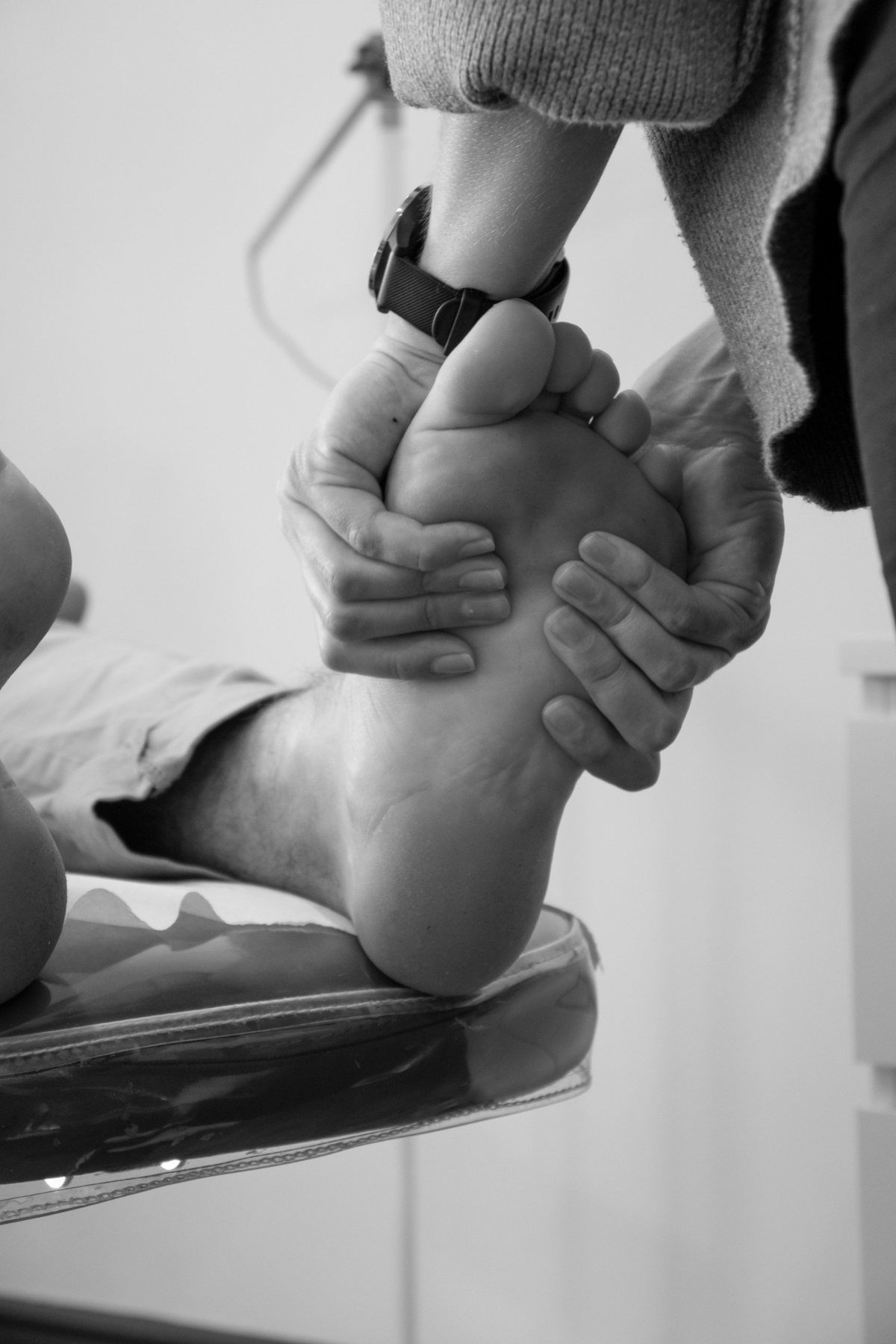
Our foot model: co-founder Courtney Kelly. Very good at sitting still.
Frequently asked questions
Can you help with toenails I can’t reach or cut?
Yes. Regular nail care is one of the most common reasons people see us.
How often should I see a podiatrist?
We recommend a foot check at least once a year, just like a dental check. If you’re over 65, a comprehensive assessment of your circulation, sensation and balance is a good idea.
Can I use a Medicare referral?
Yes. If your GP has given you a Chronic Condition Management referral, you can use it for podiatry and receive a Medicare rebate.
Do you bulk bill?
No. With a Chronic Condition Management referral you pay on the day and Medicare refunds the rebate to your account. This lets us give every appointment the time it needs.
Can my family member or carer come to the appointment?
Yes. We welcome family members and carers, especially if they help look after your feet at home.
Is the clinic accessible?
Please call us and we’ll talk you through access to the clinic.
Do I need a referral?
No. You can book directly with one of our podiatrists.
Can I claim on private health?
We don’t offer on-the-spot claiming. If your extras cover includes podiatry, you can claim with your fund using your itemised receipt. Check with your fund about your level of cover.