Pain under the heel is one of the most common reasons people see a podiatrist, affecting around 1 in 10 people at some point in their life. It can be really painful, but the good news is there is a lot we can do to help. We start by working out what is going on for you, then build a plan around you and the things you want to get back to.
Understanding heel pain
Pain is your body’s alarm system. It is there to protect you, but it isn’t always a reliable measure of damage. With heel pain, the structures around your heel usually become irritated and sensitive, rather than torn or broken.
Heel pain is rarely caused by one thing. Changes in activity or time on your feet, footwear, calf strength, general health and weight, sleep, stress and worry about the pain can all play a part. Your foot shape on its own is not usually the reason, and there is nothing wrong or abnormal about your feet.
Understanding this matters. When pain feels threatening, it’s natural to rest and avoid moving, but that can keep the cycle of pain going. Part of every plan is helping you understand your pain, so you can keep moving with confidence.
Common types of heel pain
- Plantar fasciitis (plantar heel pain): pain under the heel, often sharpest with the first steps in the morning or after sitting
- Achilles tendon pain: pain and stiffness at the back of the heel, often worse at the start of activity
- Fat pad irritation: a deep bruised feeling in the centre of the heel
- Nerve irritation or entrapment: burning, tingling or very sensitive pain around the heel
- Sever’s: heel pain in active, growing kids
How we treat heel pain
Treatment usually combines several things, chosen to suit you:
- Explaining what’s going on and what to expect, so you can make sense of your pain
- A loading and strengthening program
- Adjusting activity and load while it settles, so you can keep moving
- Footwear advice, with a shoe and movement shop on site
- Taping and padding
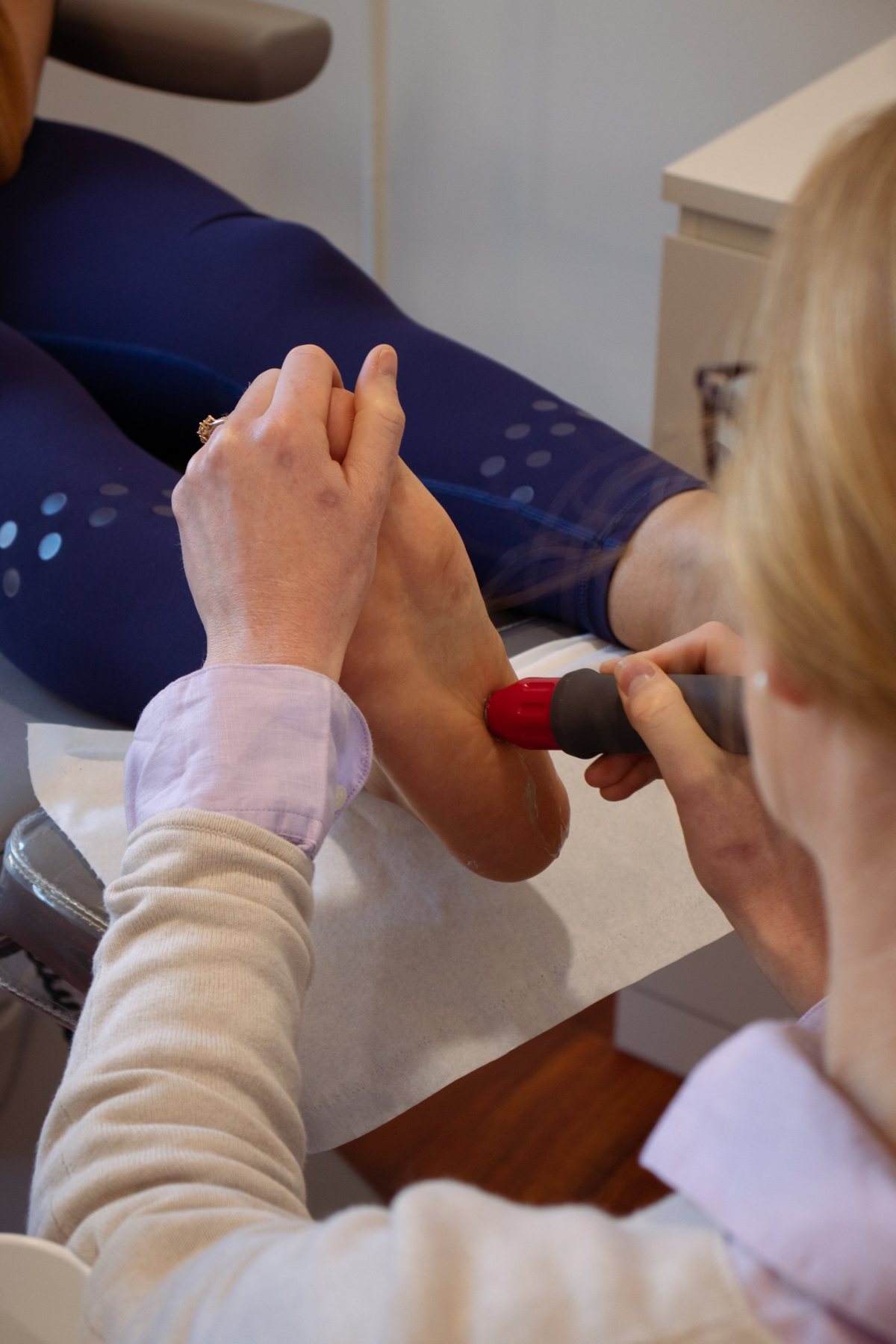
- Shockwave therapy for longer-standing pain
- Laser (photobiomodulation) therapy, which can be a good option when heel pain is very sensitive or involves nerve irritation or entrapment
- Orthotics where they suit your assessment, to change the load on your feet for a while so you can stay at work and keep active while your heel is sensitive
Sometimes advice is all you need
Not everyone needs treatment. Sometimes the most helpful thing is a clear explanation of what’s going on, practical advice and a plan you can manage yourself. We’ll always talk you through every option, including no treatment, so you can decide what’s right for you.
Frequently asked questions
Is my plantar fascia torn or damaged?
Usually not. In most people, the structures around the heel are irritated and sensitive rather than torn. That’s why staying active, with the right plan, is usually part of getting better.
Do I have a heel spur?
Heel spurs are common on x-rays, including in many people with no heel pain at all. They are the body strengthening where tissue attaches to the heel bone, and usually aren’t the cause of pain.
Do I need orthotics for heel pain?
Not always. Orthoses can help some people by changing the load on the heel while it’s sensitive, alongside exercise and footwear changes. We’ll only recommend them if they suit your assessment.
Do you use laser for heel pain?
Yes. Laser (photobiomodulation) therapy is one of the options we may suggest, especially if your heel pain is very sensitive or involves nerve irritation or entrapment.
How long does heel pain take to settle?
It varies from person to person. We’ll talk you through what to expect for your situation at your assessment.
Should I stop exercising?
Usually not. We’ll help you adjust what you do so you can keep moving while it settles.
Do I need a referral?
No. You can book directly with one of our podiatrists.
Can I claim on private health?
We don’t offer on-the-spot claiming. If your extras cover includes podiatry, you can claim with your fund using your itemised receipt. Check with your fund about your level of cover.