Nerves
Over time, diabetes can reduce feeling in your feet. You might not notice a blister, cut or pressure area.
Blood flow
Reduced circulation can slow healing.
Skin and nails
Dry skin, cracks, callus and thick nails can lead to bigger problems if they’re not cared for.
Found early
Small problems found early are much easier to manage.
Movement is part of managing diabetes
Movement is one of the best things you can do to manage diabetes. Comfortable, healthy feet make it easier to keep walking, exercising and playing sport. Looking after your feet is part of looking after your whole health, from the ground up.

A quick look, once a day
Look at the tops, soles, heels and between your toes. Use a mirror, or ask someone to help if you can’t see or reach. Look for cuts, blisters, cracks or sores; redness, swelling or warmth; changes in colour; new callus, corns or hard skin; and ingrown or damaged nails.
Everyday foot care
- Wash your feet daily with a low pH body wash, and dry well, especially between the toes.
- Moisturise the tops and soles daily with a urea-based emollient, but not between the toes. Urea is a moisturising ingredient your skin makes naturally. It draws water into the skin and, at higher strengths, gently softens hard, dry skin. That helps prevent the cracks that can let infection in. Ask us which strength suits your skin.
- Cut nails straight across. If you have reduced feeling, poor circulation, or find it hard to see or reach your feet, ask us to look after your nails.
- Never use corn plasters or sharp tools on your feet.
- Check inside your shoes for stones or rough spots before putting them on.
- Wear shoes or slippers, even at home, and avoid hot water bottles and heat packs on your feet.
Footwear
Choose shoes that fit the length, width and depth of your feet, with room for your toes, a secure fastening, a supportive sole and a smooth lining. Wear new shoes in gradually and check your feet afterwards. If you’re at higher risk, we may recommend medical grade footwear or custom insoles to reduce pressure, and we’ll talk through options that suit your feet, your lifestyle and what you enjoy wearing.
How often should a podiatrist check your feet?
Australian guidelines recommend a foot check at least once a year for everyone with diabetes. If your risk is higher, you’ll need checks more often.
| Your foot risk | How often |
|---|---|
| Very low risk | Every 12 months |
| Low risk | Every 6 to 12 months |
| Moderate risk | Every 3 to 6 months |
| High risk | Every 1 to 3 months |
Your podiatrist will tell you your risk level and how often to come back.
What we check
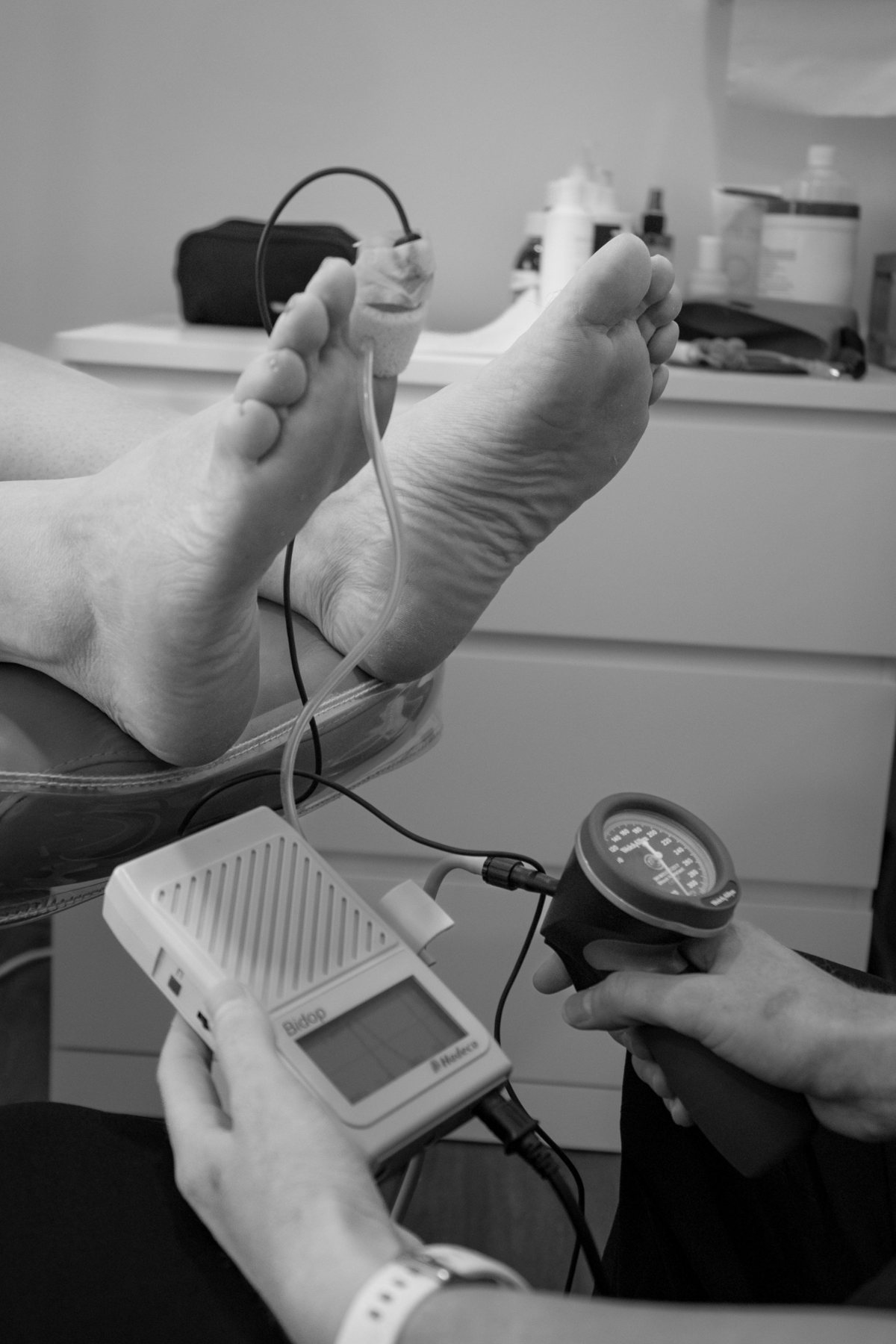
We check the nerves (feeling) and circulation in your feet, your skin, nails and footwear, and how you walk, using our treadmill with pressure mapping to show where pressure builds up under your feet.
You’ll leave with your risk level and a written care plan that we make with you, based on your health, your goals and how you live. With your consent, we send a report to your GP.
Diabetes foot health assessment
Includes nail and skin care on the day.
Diabetes movement and pressure assessment
More pressure mapping and movement testing, with exercise recommendations to keep you moving.
Seek help the same day if you notice
- a new wound, blister or sore that isn’t healing
- redness, swelling or warmth
- a black or darkening area on your foot
- pain in a foot that’s usually numb
- signs of infection, such as pus or a bad smell
Call us on (08) 9280 0223, see your GP, or go to an Emergency Department. If you also have a fever or feel unwell, go to your nearest Emergency Department.
If your GP has set up a GP Chronic Condition Management Plan, you may be able to claim a Medicare rebate. See Funding your visit.